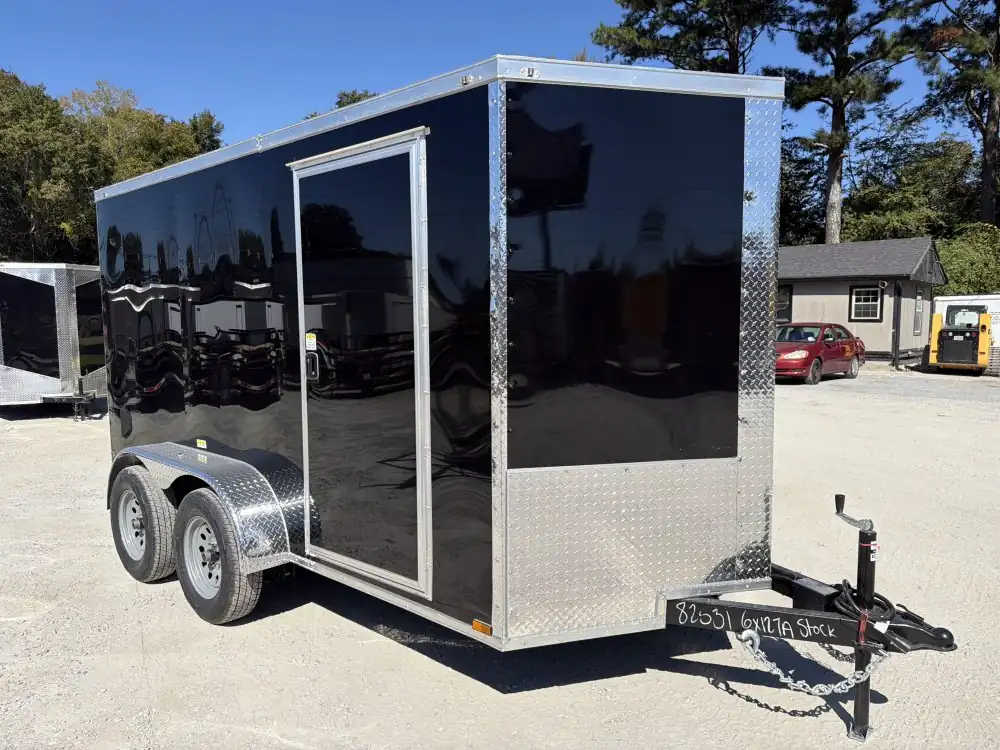
An enclosed trailer, also called a cargo trailer, works hard to keep tools, inventory and equipment dry and secure. Most of what keeps it working is simple: a few minutes of checks before each trip and a closer look a few times a year. The parts that need the most attention on an enclosed trailer are the ones an open trailer does not have, such as the roof, seams, door seals and ramp door. Here is an enclosed trailer maintenance checklist you can follow by trip, by month and by year.
Before Every Trip
These take five minutes and catch most roadside problems before they start.
- Coupler and safety chains. The coupler is latched and pinned on the ball, and chains are crossed under the tongue.
- Lights. Tail, brake, turn and clearance lights all work. Check the marker lights along the sides and top of the box.
- Tires. Check pressure when cold and look for cuts, bulges and uneven wear.
- Lug nuts. Make sure none are loose or missing.
- Doors latched. The rear ramp door or barn doors and the side door are closed and locked.
- Cargo secured. Everything inside is tied to D-rings or E-track so it cannot slide into the walls or doors.
- Breakaway cable is clipped to the truck if the trailer has electric brakes.
Every Month
Roof and Seams
Water is the main enemy of an enclosed trailer. Look at the roof seams, front cap and the sealant around roof vents and lights. Sealant that has cracked, pulled away or gone chalky lets water in. Clean the area and reseal it with a sealant made for trailers.
Door Seals and Hinges
Check the rubber seals around the rear door and side door. They should be soft and pressed evenly when the door is closed. Lubricate hinges and latches. On a ramp door, check the spring assist and cables, which help lift and lower the ramp, for fraying or loose hardware.
Interior and Floor
Look for water stains on the walls, ceiling and floor, especially in corners and near the doors. A wet spot after rain is a leak you want to find early. Check that interior lights work, and that D-rings or E-track are tight.
Vents
Roof and side vents let heat and moisture out. Make sure they open and close and are not cracked. Good airflow helps prevent musty smells and condensation.
Every Six Months or Every Few Thousand Miles
- Wiring. Inspect the plug on the tongue for corrosion and the wires under the trailer for chafing or loose clips.
- Brakes. If the trailer has electric brakes, test them with the brake controller in a parking lot. A shop can check the magnets and shoes.
- Jack. Raise and lower the tongue jack fully and grease it if it is stiff.
- Exterior. Wash the trailer, including the roof if you can do so safely. Road film and pollen hold moisture against seams.
- Tires. Check the DOT date code. The NHTSA tire safety page explains how to read it and notes that tires degrade with age even when tread looks good.
Every Year
- Wheel bearings. Have them inspected, cleaned and repacked, or do it yourself if you have the tools.
- Suspension. Look at springs, hangers and shackles for cracks and worn bushings.
- Floor. Check the plywood floor from underneath for soft spots or delamination, especially at the rear door where water collects.
- Frame. Look for rust on the frame and crossmembers and touch up any spots.
- Full roof inspection. Look closely at every seam and fastener.
Enclosed Trailer Maintenance Schedule at a Glance
| When | What to check |
|---|---|
| Every trip | Coupler, chains, lights, tires, lug nuts, doors, cargo, breakaway cable |
| Monthly | Roof seams and sealant, door seals, hinges, ramp spring, interior leaks, vents |
| Every 6 months | Wiring and plug, brakes, jack, wash, tire age |
| Yearly | Wheel bearings, suspension, floor, frame, full roof inspection |
Keeping the Inside Dry and Clean
Moisture can build up inside a closed trailer even without a leak. Wet tools, muddy boots and humid summer air all add water to the box. Sweep out dirt and debris after jobs, let wet gear dry before you close the doors for the night, and crack the roof vent when the trailer is parked in hot weather. If you store the trailer for weeks at a time, open it up on a dry day to air it out. A clean, dry floor lasts longer and keeps your cargo from picking up a musty smell.
Signs Something Needs Attention Now
- Water inside after rain
- A ramp door that drops hard or is difficult to lift
- A hub that is much hotter than the others after a drive
- Lights that flicker or work only sometimes
- A soft or spongy spot in the floor
- The trailer pulling to one side when you brake
Any of these is worth fixing before your next trip, not after.
Shopping for a New Enclosed Trailer?
Maintenance starts on day one. When you look at a trailer, check the seams, door seals and wiring the same way you would on your own. Our post on 4 things to check on new enclosed trailers covers what to look for. You can compare current sizes and options, such as D-rings or E-track, shelving, extra lighting and vents, on our enclosed trailers page.
Let Our Shop Help
Our trailer repair shop in Jonesboro offers a free multi-point inspection and handles wiring, re-flooring, wheel bearing service, brakes, axles, seals, suspension, jacks, couplers and alignments. Labor is billed by the minute, so you pay for the time the job takes.
Come see us at 8834 Tara Blvd, Jonesboro, GA 30236, just south of Atlanta. We are open Monday to Friday 9 AM to 5 PM and Saturday 9 AM to 4 PM. Call (770) 603-8511 or text (404) 383-8194 Bring your trailer in for a free multi-point inspection.
Frequently Asked Questions
How often should I maintain my enclosed trailer?
Do a quick check before every trip, look over the roof seams, door seals and interior monthly, check wiring, brakes and the jack every six months, and have the wheel bearings, suspension and floor inspected yearly.
How do I find a leak in an enclosed trailer?
Look for water stains in corners, near doors and around roof vents after rain. Then check the roof seams, front cap and sealant around vents and lights for cracks or gaps.
Do I need to reseal my enclosed trailer roof?
Sealant breaks down over time. If it is cracked, pulling away or chalky, clean the area and reseal it with a sealant made for trailers.
Does A&A Center Trailers inspect trailers?
Yes. Our repair shop in Jonesboro offers a free multi-point inspection and handles wiring, re-flooring, bearings, brakes, axles and more.