
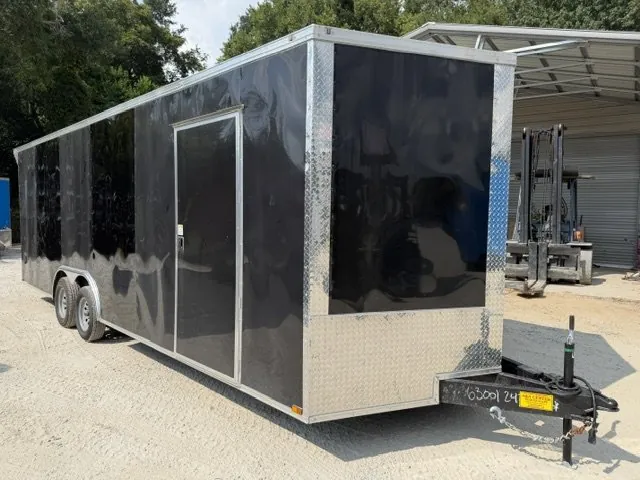
For a lot of contractors around Atlanta, the pickup bed stopped being enough a long time ago. Tools ride loose, materials get wet, and every morning starts with a hunt for the right fitting. A well-planned enclosed trailer fixes that. It locks up overnight, keeps everything dry and puts every tool where your hand expects it.
The key word is planned. Here is how to set up an enclosed trailer for contractor work so it saves time on every job instead of becoming a bigger mess on wheels.
Start With How You Work
Before you buy shelving, spend a week paying attention to your routine:
- Which tools and materials do you grab on every single job?
- What do you carry only now and then?
- What is long, like pipe, conduit, trim or ladders?
- What is heavy, like compressors, generators and boxes of fasteners?
- Do you load from the back, the side or both?
Your answers decide the size, the door setup and where everything goes.
Pick the Size and Doors
Many trades fit in a 6x12 or 7x14. Crews that carry more, or want a work bench or office area inside, often move to a 7x16 or an 8.5-wide trailer. Interior height matters too: being able to stand up inside makes a big difference when you are in and out all day.
For doors, a rear ramp suits anything on wheels, like carts, compressors and mowers. Double rear barn doors suit forklift loading and pallets. A side door lets you grab a tool without unloading the back, which adds up over a day of trips to the trailer.
Layout Ideas by Trade
Plumbers
Bins for fittings on one wall, a pipe rack overhead or on the roof, and heavy items like water heaters and pipe threaders low and near the axles. A side door near the fitting bins saves a lot of steps.
Electricians
Spool racks for wire, conduit storage overhead, parts bins sorted by size and a clear floor area for panels and fixtures.
Painters
Shelving with lips or straps to keep cans in place, ladder storage, a spot for sprayers and drop cloths, and a roof vent to help with fumes and heat.
Carpenters and Remodelers
A fold-down work bench, tool cabinets and wall storage for saws, with open floor space for lumber and materials.
Landscapers and Lawn Care
Ramp door, open floor for mowers, trimmer racks on the walls, and a fuel storage plan that keeps cans upright and ventilated.
Shelving, Racks and Tie-Downs
- Mount shelving to the wall framing, not just the skin. Loaded shelves put a lot of force on their mounts every time you hit a bump.
- Use bins with lids or lips so parts stay put in turns.
- Add E-track or D-rings to strap down heavy items and anything on wheels.
- Use the roof. Our contractor trailer packages include ladder racks on the roof, and an access ladder is an option.
Build It to Carry the Weight
Contractor loads are heavy and they stay in the trailer every day. Floors and framing matter. Our contractor trailers use 3/4-inch plywood floors, not OSB, on steel tube crossmembers 16 inches on center, with an upgrade to 12 inches on center for heavy equipment and tools.
Keep It Balanced
Put the heaviest items low and close to the axles, with a little more weight ahead of the axles than behind them. Too much weight at the back can make a trailer sway. Spread heavy items evenly left to right.
Watch the Total
Shelving, bins, a generator and a full load of materials add up fast. Weigh your setup once it is loaded and compare it to the trailer's GVWR and your truck's ratings.
Power, Lighting and Climate
- Interior lighting for early starts and late finishes.
- Electrical packages with outlets so you can charge batteries and run tools at the jobsite.
- Roof vents and A/C to keep the trailer bearable in a Georgia summer.
- An office area with climate control, if you meet clients or do paperwork on site.
Security
An enclosed trailer full of tools is a target. Use a coupler lock when the trailer is parked unhitched, quality locks on every door, and park it where it is visible and well lit. Keep a list of serial numbers and photos of your tools.
When Your Rig Counts as Commercial
This catches many contractors by surprise. The Georgia Department of Public Safety explains that vehicles and combinations with a GVWR of 10,001 lb or more used as part of a business are generally commercial motor vehicles under the safety regulations. That can bring requirements like a USDOT number, a medical examiner's certificate, vehicle markings and inspections. A three-quarter-ton truck pulling a tandem enclosed trailer can reach that combined rating. Check before you hit the road.
Standard Trailer or Custom Build?
A standard enclosed trailer from the lot plus shelving you add yourself works for many trades. If you want a specific door layout, upgraded framing, an office, electrical or A/C, a custom build saves you from cutting and modifying later. See our contractor trailer builds and our custom trailer options, or browse enclosed trailers for sale to start with a stock unit.
Paying for It
Paying over time? We offer traditional trailer financing, no credit check rent to own on new standard trailers with 15% down for Georgia buyers (and buyers in 20 other states), and lease-to-own options through ClickLease, which starts with a soft credit pull and is available in all 50 states. Call or text us and we will walk you through each one.
Come see us at 8834 Tara Blvd, Jonesboro, GA 30236, just south of Atlanta. We are open Monday to Friday 9 AM to 5 PM and Saturday 9 AM to 4 PM. Call (770) 603-8511 or text (404) 383-8194 and tell us what you need to haul.
Frequently Asked Questions
What size enclosed trailer do contractors use?
Many trades fit in a 6x12 or 7x14 enclosed trailer. Crews that carry more equipment, or want a work bench or office inside, often choose a 7x16 or an 8.5-wide trailer.
How do I organize a contractor trailer?
Plan around how you work: daily tools near the side door, heavy items low and near the axles, long materials overhead or on a roof rack, and parts in bins mounted to the wall framing.
Do contractor trailers come with ladder racks?
Our contractor trailer packages include ladder racks on the roof, and an access ladder is an option.
Is my truck and trailer a commercial vehicle in Georgia?
If the combination has a GVWR of 10,001 lb or more and is used for business, Georgia DPS says it is generally treated as a commercial motor vehicle under the safety regulations. Check the rules that apply to you.
Can you build a custom contractor trailer?
Yes. We build contractor trailers with options like door layouts, upgraded framing, shelving, electrical, A/C and office areas. Call (770) 603-8511 to talk through your setup.